

Organic Tea Tree Oil – The Natural All-Rounder
Benefits at a Glance
- Fresh, clean & purifying: The unmistakable scent of tea tree – medicinal, fresh and powerfully clean. The oil that means business.
- The skin care champion: Tea tree is the most studied essential oil for skin care – traditionally valued for blemishes, impurities and supporting a clear complexion.
- Nature's antimicrobial powerhouse: Terpinen-4-ol, its main compound, is one of the best-researched antimicrobial molecules in aromatherapy.
- Organic quality: 100% pure and natural, steam-distilled from leaves. From organic farming. From Australia.
Application & Special Features
Application:
In a diffuser for a fresh, purifying atmosphere. Diluted in carrier oil for targeted skin care. As a natural addition to cleaning and personal care products.
Targeted uses:
In a diffuser (3-5 drops) for a fresh, clean atmosphere – particularly valuable during the cold season. For skin care, dilute 1-2 drops in 10 ml of carrier oil (e.g. Organic MCT Oil) and apply to blemishes or impurities. Add 2-3 drops to your shampoo for a refreshing, clarifying scalp treatment. For natural cleaning, add a few drops to your cleaning spray. Tip: Tea tree is the essential oil you always want to have at home – its versatility is unmatched.
Perfect Blending Partners
Tea Tree is a fresh middle note with a clean, medicinal-herbal character:
- For citrus freshness: Lemon (bright citrus lifts the medicinal character – a sparkling clean combination).
- For floral softness: Lavender (floral calm softens the medicinal edge – the classic skin-care duo).
- For forest depth: Silver Fir (fresh conifer meets clean tea tree – the air purification powerhouse).
Australia's Gift to Aromatherapy
Aboriginal Australians have used tea tree for thousands of years. Modern science has confirmed what they always knew – this humble leaf contains one of nature's most effective antimicrobial compounds.
Product Information
- INCI: Melaleuca alternifolia leaf oil · CAS 85085-48-9 / 8022-72-8 / 68647-73-4 · EINECS 285-377-1
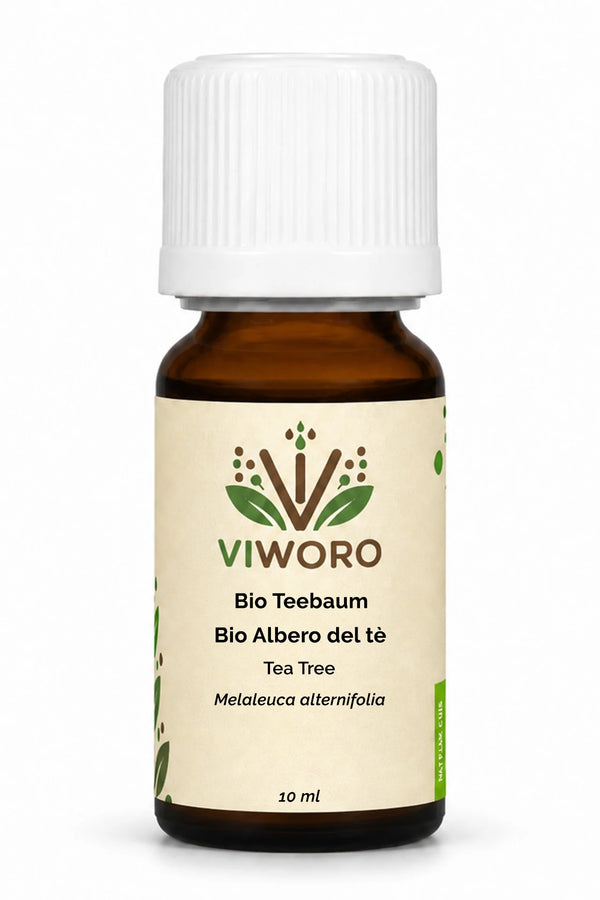
- Plant: Tea Tree (Melaleuca alternifolia (Maiden & Betche) Cheel)
- Part used: Leaves
- Extraction: Steam distillation
- Quality: 100% pure and natural essential oil (Organic)
- Origin: Australia
- Main components: Terpinen-4-ol (30-48%), gamma-Terpinene (10-28%), alpha-Terpinene (5-13%), 1,8-Cineole (0-15%), alpha-Terpineol, p-Cymene
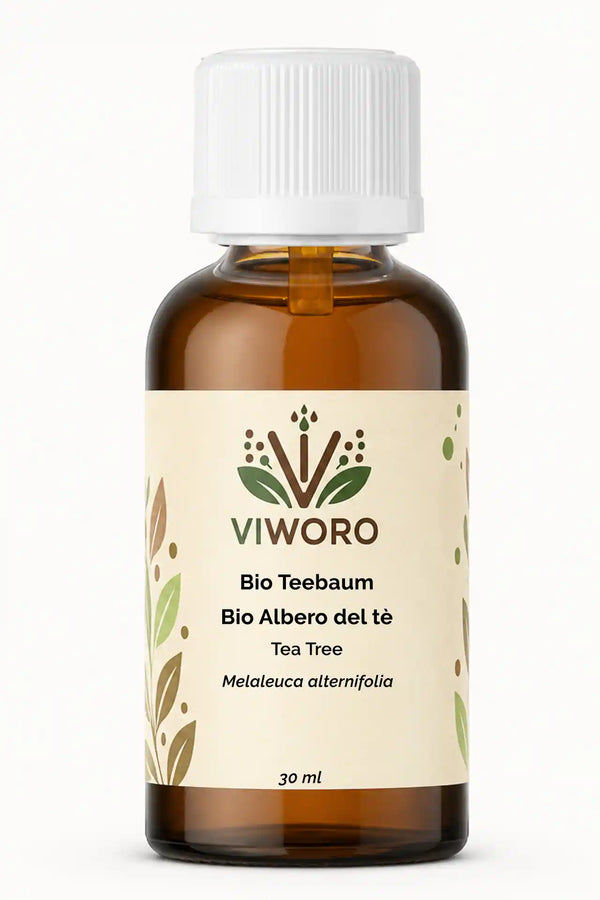
- Packaging: Amber glass bottle with dropper – airtight and light-protected
The Scent Profile
- Main aroma: Fresh, medicinal and clean – a distinctive, camphor-like scent with a characteristic "clean" character that is instantly recognisable.
- Secondary note: Slightly spicy and warm, with a subtle earthy undertone that adds depth to the fresh top notes.
- Nuance: A hint of green, herbal sweetness that softens the medicinal edge and adds natural warmth.
Intensity: Medium-high – fresh, clean and unmistakably medicinal. Tea tree has a distinctive scent that most people associate with cleanliness and purity. It's not a perfume oil – it's a working oil.
The chemistry of the oil
Tea tree oil is one of the most scientifically studied essential oils in the world, with over 700 published research papers. Its primary active molecule, Terpinen-4-ol (30-48%), is a monoterpene alcohol with remarkable antimicrobial properties – effective against a broad spectrum of bacteria, fungi and viruses. The International Standard ISO 4730 specifies that quality tea tree oil must contain a minimum of 30% terpinen-4-ol and a maximum of 15% 1,8-cineole (too much cineole increases irritation potential). Gamma-Terpinene (10-28%) and alpha-Terpinene (5-13%) are precursors to terpinen-4-ol and contribute to the fresh, herbal character. p-Cymene adds a slightly warm, spicy note. What makes tea tree unique is the synergy between its components – studies show that the whole oil is more effective than isolated terpinen-4-ol alone, suggesting that the supporting molecules enhance the primary active compound's effectiveness. This is a perfect example of nature's wisdom: the whole is greater than the sum of its parts.
The Plant
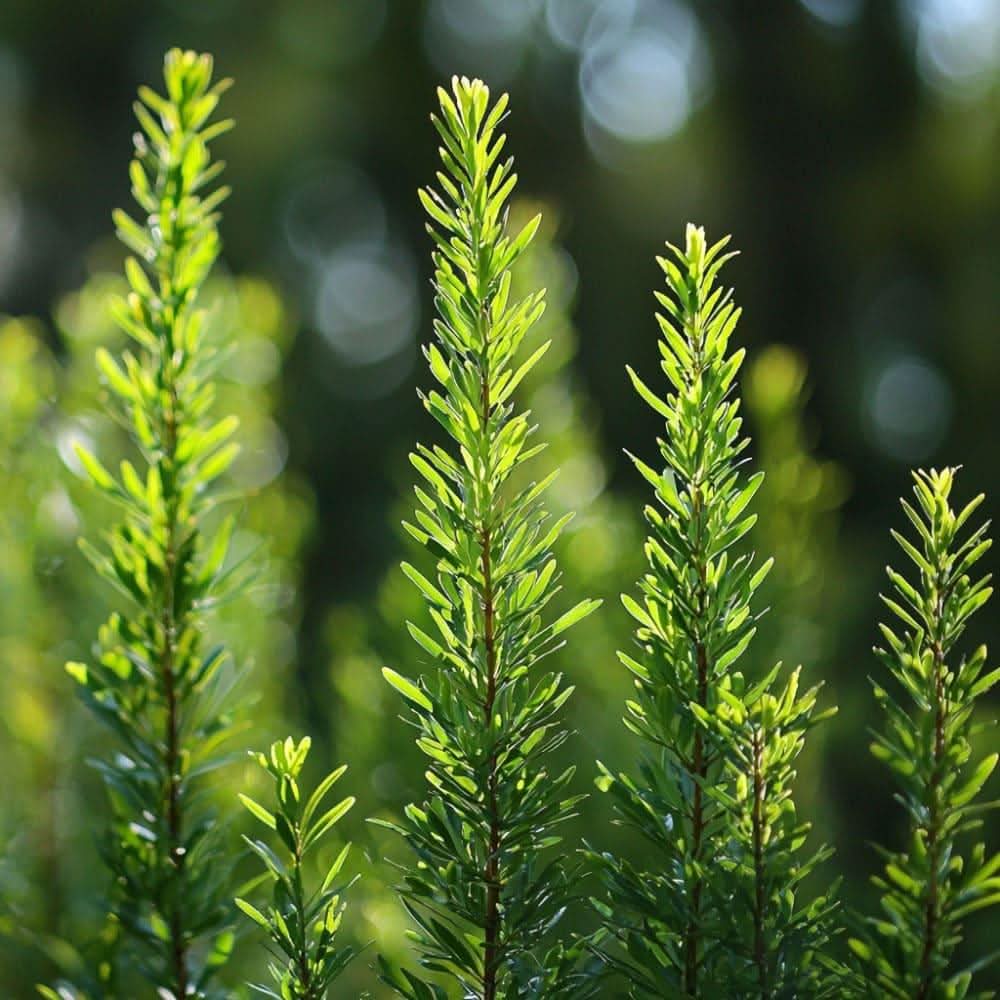
Melaleuca alternifolia (Tea Tree) is a small tree or large shrub from the Myrtaceae (myrtle) family. Native to a small area of New South Wales, Australia, it grows naturally in swampy, low-lying areas along streams and rivers. The tree reaches 5-8 metres in height with papery bark and narrow, aromatic leaves. Australian Aboriginal peoples have used the leaves for medicinal purposes for thousands of years – crushing them for poultices and bathing in tea tree-infused waters. The name "tea tree" was given by Captain James Cook's crew in the 18th century, who used the leaves to brew a tea-like drink. Modern interest in tea tree oil began in the 1920s when Australian researcher Arthur Penfold demonstrated its powerful antimicrobial properties. Today, it is one of the most widely used essential oils in the world.
Frequently Asked Questions (FAQ)
Can I apply tea tree oil directly to blemishes?
While tea tree is one of the few essential oils sometimes used neat on individual spots, we recommend diluting it (1-2 drops in 10 ml carrier oil) for regular use. This is gentler on the skin while still being effective. For a single blemish, one drop on a cotton bud can be applied directly, but not on large areas.
Is tea tree oil effective against acne?
Tea tree oil is one of the most studied natural ingredients for acne-prone skin. Multiple clinical studies have shown that 5% tea tree oil is comparable in effectiveness to 5% benzoyl peroxide, with fewer side effects. Dilute in carrier oil or use products containing tea tree.
Can I add tea tree to my shampoo?
Yes. Adding 2-3 drops to a portion of shampoo is a popular way to support scalp health. Tea tree is traditionally used for itchy, flaky scalps and generally promotes a clean, refreshed feeling.
How does tea tree compare to cajeput?
Both are Melaleuca species. Tea tree excels in skin care and antimicrobial applications due to its high terpinen-4-ol content. Cajeput is better for respiratory support and muscle care, and is gentler for children. They complement each other well.
Is tea tree suitable for children?
In the diffuser, tea tree is generally well tolerated for children over 6 years. For skin application on children, always dilute well (1 drop in 10 ml carrier oil). Not recommended for children under 3 years.
How should I store the oil?
Keep away from direct light and heat sources. Tea tree oil is more sensitive to oxidation than many oils – oxidised tea tree oil can cause skin irritation. Close tightly after use and use within 1-2 years of opening for best quality.
Choose Your Size
Organic Tea Tree Essential Oil
10 ml Bottle
8,00 €
The essential oil every household needs.
Recommended
30 ml Bottle
18,00 €
The best choice for regular use. You save!
Important Safety Information
- Use only diluted for large skin areas. Avoid contact with eyes and mucous membranes.
- Keep out of reach of children.
- Not recommended for children under 3 years.
- During pregnancy, consult your doctor before use.
- Oxidised tea tree oil can cause skin irritation – use within 1-2 years and close tightly.
- May cause skin sensitisation – always perform a patch test.
- For aromatic and external use only.