



Organic Cajeput Oil – The Gentle Protector
Benefits at a Glance
- Fresh & clearing: A clean, camphor-like freshness with a softer, sweeter character than eucalyptus – like breathing mountain air near the sea.
- The family-friendly respiratory oil: Cajeput offers respiratory support similar to eucalyptus, but gentler – making it suitable for older children and sensitive individuals.
- Warming & soothing: Traditionally valued for easing muscle tension and discomfort – a comforting oil for the cold season.
- Organic quality: 100% pure and natural, steam-distilled from leaves and twigs. From organic farming.
Application & Special Features
Application:
In a diffuser for a fresh, clearing atmosphere. For steam inhalation during the cold season. Diluted in carrier oil for warming massages.
Targeted uses:
In a diffuser (3-5 drops) for a fresh, purifying atmosphere – ideal during the cold season for the whole family. For steam inhalation, add 2-3 drops to a bowl of hot water and inhale gently. For a warming muscle rub, dilute 3-4 drops in 10 ml of carrier oil (e.g. Organic MCT Oil) and massage into tense areas. Family-friendly: Cajeput is one of the gentler cineole-rich oils, making it a better choice than eucalyptus for households with children.
Perfect Blending Partners
Cajeput is a fresh top-to-middle note with a clean, camphor-like character:
- For respiratory power: Rosemary (two clearing oils together – the deep breath blend for the cold season).
- For calming warmth: Lavender (fresh clearing meets floral calm – perfect for evening diffusing when feeling unwell).
- For citrus brightness: Lemon (bright citrus lifts the medicinal character – a fresh, uplifting room scent).
Tea Tree's Gentler Cousin
Same botanical family, similar benefits, but softer and more forgiving. Cajeput is the Melaleuca you choose when you want effectiveness with gentleness.
Cajeput vs. Eucalyptus vs. Tea Tree: All three belong to the Myrtaceae family and share respiratory-supportive properties. Eucalyptus globulus is the strongest and most medicinal. Tea Tree excels in skin care and antimicrobial use. Cajeput sits in the middle – effective for respiratory support and muscle care, but gentler than eucalyptus. This makes cajeput ideal for families and those who find eucalyptus too intense.
Product Information
- Plant: Cajeput (Melaleuca leucadendra L.)
- Part used: Leaves and twigs
- Extraction: Steam distillation
- Quality: 100% pure and natural essential oil (Organic)
- Origin: Southeast Asia
- Main components: 1,8-Cineole (Eucalyptol) (40-65%), alpha-Terpineol (10-15%), Limonene, Linalool
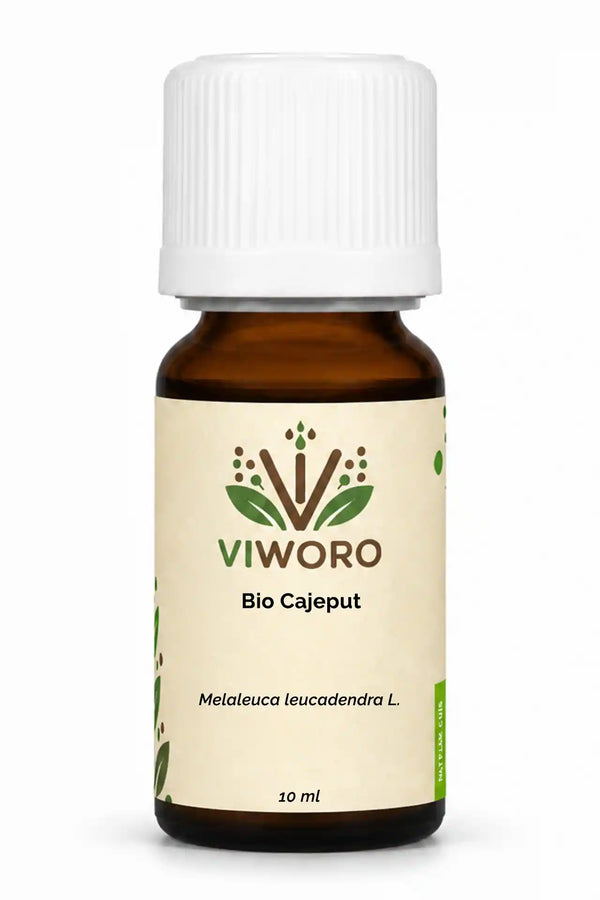
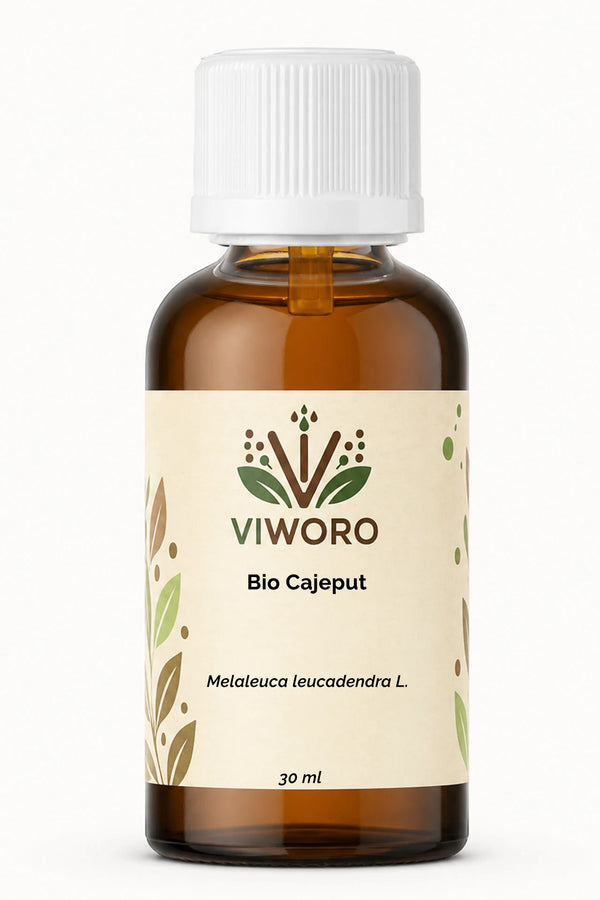
- Packaging: Amber glass bottle with dropper – airtight and light-protected
The Scent Profile
- Main aroma: Fresh, camphor-like and clearing – reminiscent of eucalyptus but softer, sweeter and more rounded.
- Secondary note: Slightly fruity and mildly herbaceous, with a warm undertone that distinguishes it from the sharper eucalyptus.
- Nuance: A subtle floral-sweet hint (from linalool and terpineol) that softens the medicinal character and adds unexpected elegance.
Intensity: Medium – fresh, clearing and pleasantly clean. Cajeput is less overwhelming than eucalyptus – it clears the air and the mind without the sharp, medicinal edge.
The chemistry of the oil
Cajeput oil shares its dominant molecule with eucalyptus: 1,8-Cineole (Eucalyptol) (40-65%), a bicyclic monoterpene oxide renowned for its respiratory-supportive properties. What makes cajeput different is the supporting cast. Alpha-Terpineol (10-15%) is a monoterpene alcohol with a pleasantly floral-sweet character and notable calming properties – it softens the medicinal edge of cineole. Linalool adds additional floral sweetness, and Limonene contributes a subtle citrusy brightness. The result is an oil that provides similar respiratory benefits to eucalyptus but with a gentler, more balanced aromatic profile. The name "cajeput" comes from the Malay "kayu putih" meaning "white wood," referring to the tree's distinctive pale bark. In Southeast Asian traditional medicine, cajeput has been a household remedy for centuries – used for everything from colds to muscle pain. Its gentler profile makes it particularly valued for children's aromatherapy, where it provides effective respiratory support without the intensity of eucalyptus globulus.
The Plant
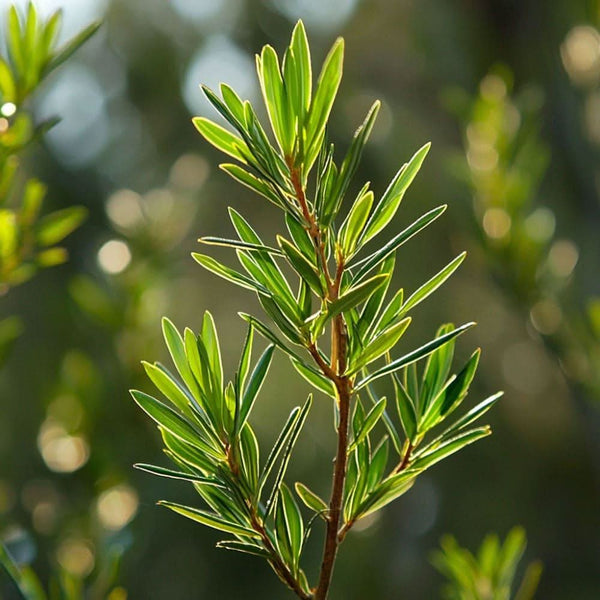
Melaleuca leucadendra (Cajeput Tree) is a large evergreen tree from the Myrtaceae (myrtle) family – the same family as tea tree and eucalyptus. Native to Southeast Asia, Australia and Papua New Guinea, it can reach 20-30 metres in height with a characteristic papery, white bark that peels in layers. The tree is remarkably resilient, thriving in swampy areas, flood plains and poor soils. In its native range, cajeput forests form a distinctive landscape. The essential oil is steam-distilled from the leaves and young twigs, producing a clear to pale yellow oil with a fresh, camphor-like scent. Cajeput has been part of traditional Southeast Asian medicine for centuries and remains a household staple in many Malaysian and Indonesian communities.
Frequently Asked Questions (FAQ)
Is cajeput suitable for children?
Cajeput is one of the gentler cineole-rich oils and is often recommended as an alternative to eucalyptus for children over 6 years. In the diffuser, use in low doses (2-3 drops). For younger children (3-6 years), consult a professional first. Not recommended for children under 3.
What is the difference between cajeput and eucalyptus?
Both contain 1,8-cineole, but cajeput is gentler and sweeter. Eucalyptus globulus has a higher cineole content (60-85%) and a sharper, more medicinal character. Cajeput has more supporting molecules (terpineol, linalool) that soften the overall effect. Choose cajeput when you want eucalyptus-like benefits in a milder form.
Can I use cajeput for muscle care?
Yes. Cajeput is traditionally valued for warming muscle care. Dilute 3-4 drops in 10 ml carrier oil and massage into tense or sore areas. The warming, soothing character makes it ideal for after exercise or during the cold season.
How does cajeput compare to tea tree?
Both are Melaleuca species. Tea tree is stronger in antimicrobial action and is primarily used for skin care. Cajeput is better for respiratory support and muscle care. Tea tree has a sharper, more medicinal scent; cajeput is softer and more pleasant for room diffusing.
Can I use cajeput in the sauna?
Yes. Cajeput is a wonderful sauna oil. Add 3-5 drops to the infusion water for a fresh, clearing experience. It supports free breathing and creates an invigorating atmosphere – similar to eucalyptus but gentler and sweeter.
How should I store the oil?
Keep away from direct light and heat sources. The amber glass bottle protects the oil from UV radiation. Close tightly after use. Cajeput oil retains its quality for several years when stored correctly.
Choose Your Size
Organic Cajeput Essential Oil
10 ml Bottle
9,00 €
Perfect for trying it out or as a gift idea.
Recommended
30 ml Bottle
20,25 €
The best choice for the cold season. You save!
Important Safety Information
- Use only diluted. Avoid contact with eyes and mucous membranes.
- Keep out of reach of children.
- For children over 6 years: use in low doses only. Not for children under 3 years.
- During pregnancy, consult your doctor before use.
- May cause skin sensitisation – always perform a patch test.
- For aromatic and external use only.