

Organic Petitgrain Oil – Fresh, Green and Softly Floral
A fresh, green organic oil from bitter-orange leaves – ideal for calm focus, unwinding in the evening and natural fragrance blends.
✓ Fresh, green and softly floral · ✓ Relaxing without feeling heavy · ✓ An affordable alternative to neroli
Benefits at a Glance
- Fresh, floral & green: The bridge between citrus and floral – bright, green and elegantly fresh with a calming, woody depth.
- Calming & mood-lifting: Petitgrain is the daytime calmer – it relaxes without making you sleepy, perfect for finding focus through calm.
- The affordable neroli alternative: From the same tree as precious neroli oil, petitgrain offers similar calming benefits at a fraction of the price.
- Organic quality: 100% pure and natural, steam-distilled from leaves and twigs. From organic farming. From Paraguay.
Application & Special Features
Application:
In a diffuser for a fresh, calming atmosphere. Diluted in carrier oil for skincare and relaxing massage. As a natural deodorant and body splash component.
Targeted uses:
In a diffuser (3-5 drops) for a fresh, uplifting yet calming atmosphere – ideal for the office, study or any time you need relaxed focus. For skincare, add 2-3 drops to 10 ml of carrier oil (e.g. Organic MCT Oil) for a light, refreshing facial oil. For a calming body oil, use 4-5 drops in 10 ml carrier oil. Tip: Petitgrain is one of the best essential oils for natural deodorant formulations – fresh, clean and skin-friendly.
Perfect Blending Partners
Petitgrain is a fresh heart note with a citrusy-floral, green character:
- For floral depth: Lavender (green-floral meets purple-floral – a beautifully layered calming blend).
- For citrus harmony: Sweet Orange (from the same botanical family – citrus brightness meets leafy green depth).
- For woody grounding: Cedar (green freshness on a warm woody base – sophisticated and calming).
Three Oils, One Tree
The bitter orange tree gives us three essential oils: neroli from the flowers, bitter orange from the peel, and petitgrain from the leaves. Same tree, three completely different personalities.
Petitgrain vs. Neroli: Both come from the bitter orange tree (Citrus aurantium), but from different parts. Neroli is distilled from the flowers – it takes approximately 1,000 kg of blossoms for 1 kg of oil, making it one of the most expensive essential oils. Petitgrain is distilled from the leaves and twigs – far more abundant and affordable. They share key molecules (linalool, linalyl acetate) and similar calming properties, making petitgrain an excellent and accessible alternative.
Product Information
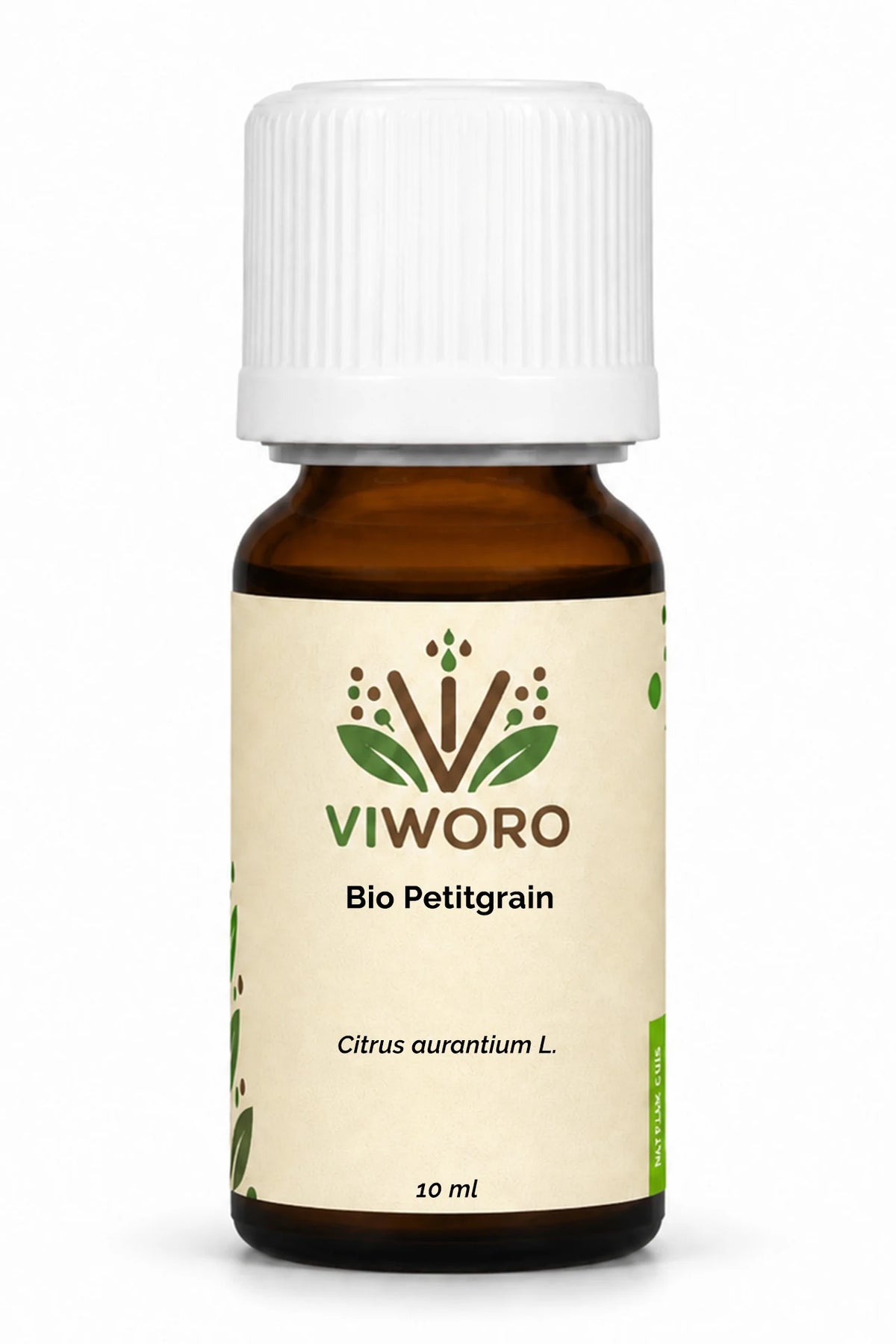
- Plant: Bitter Orange (Citrus aurantium L.)
- Part used: Leaves and twigs
- Extraction: Steam distillation
- Quality: 100% pure and natural essential oil (Organic)
- Origin: Paraguay
- Main components: Linalyl acetate (40-55%), Linalool (20-30%), alpha-Terpineol, Geraniol, Myrcene
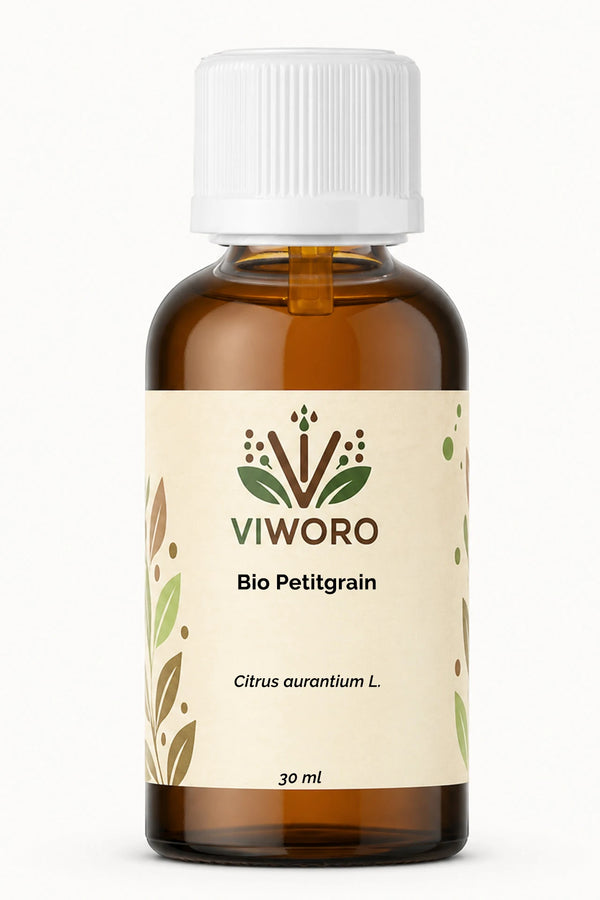
- Packaging: Amber glass bottle with dropper – airtight and light-protected
The Scent Profile
- Main aroma: Fresh, green and citrusy – like crushing a bitter orange leaf between your fingers. Clean, bright and gently floral.
- Secondary note: Floral and slightly woody, with a soft, neroli-like sweetness that adds elegance and depth.
- Nuance: A subtle, bitter-green undertone that adds complexity and a distinctive "leaf" character – fresh, natural and alive.
Intensity: Medium – fresh, clean and pleasantly present. Petitgrain is an oil of understated elegance – it never overpowers, but it always adds a beautiful, green-floral dimension.
The chemistry of the oil
Petitgrain oil shares its two dominant molecules with lavender: Linalyl acetate (40-55%) and Linalool (20-30%). This ester-alcohol combination is responsible for the oil's notable calming properties – studies show that linalyl acetate acts on the nervous system in a sedative, antispasmodic manner. Alpha-Terpineol adds a floral-sweet dimension and enhances the calming effect. Geraniol contributes a subtle rosy note. Myrcene provides a fresh, green-herbal facet. What distinguishes petitgrain from neroli (same tree, different part) is the absence of the heavy indolic compounds that give neroli its intoxicating floral depth. Petitgrain is cleaner, greener and more "daytime appropriate." The name "petitgrain" literally means "small grain" – it originally referred to the tiny, unripe fruits that were once included in the distillation. Today, only leaves and twigs are used, but the historical name persists. Paraguayan petitgrain is particularly prized for its balanced, refined character.
The Plant
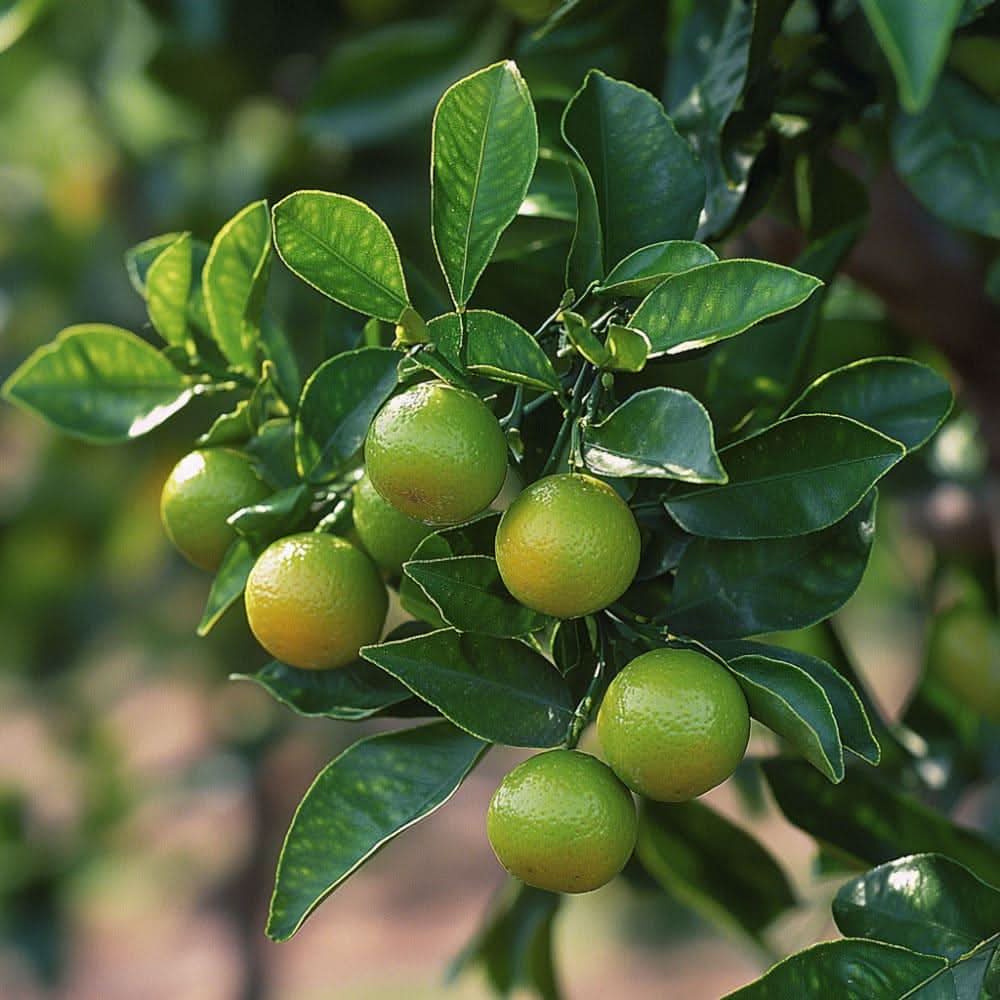
Citrus aurantium (Bitter Orange, Seville Orange) is an evergreen citrus tree from the Rutaceae family. Native to Southeast Asia, it was brought to the Mediterranean by Arab traders and later to South America by Spanish colonists. Paraguay is now the world's leading producer of petitgrain oil. The tree reaches 5-10 metres in height with glossy, dark green leaves, fragrant white flowers and bitter, orange-coloured fruits. It is the most versatile tree in aromatherapy, producing three distinct essential oils: neroli (flowers), petitgrain (leaves) and bitter orange (peel). The leaves are rich in aromatic compounds, with a characteristically green, fresh-floral fragrance when crushed.
Frequently Asked Questions (FAQ)
Is petitgrain similar to neroli?
They share the same tree and some key molecules (linalool, linalyl acetate), giving petitgrain some of neroli's calming character. However, petitgrain is fresher, greener and less intensely floral. It's an excellent, affordable alternative for those who love neroli's calming properties.
Can I use petitgrain for sleep?
Yes. The high linalyl acetate and linalool content gives petitgrain notable calming properties. However, it is less sedating than lavender – making it ideal for daytime relaxation and calm focus. For sleep, combine with lavender for enhanced effect.
Is petitgrain good for skincare?
Petitgrain is well suited for skincare, particularly for oily and combination skin. Its gentle, antibacterial properties make it a popular choice in natural deodorant and body care formulations. Dilute 2-3 drops in 10 ml carrier oil.
Why is petitgrain so affordable?
The leaves and twigs of the bitter orange tree are abundantly available, and the oil yield is good. Unlike neroli (which requires 1,000 kg of flowers per kg of oil), petitgrain can be produced efficiently, making it one of the best-value essential oils available.
Is petitgrain suitable for children?
With children we recommend caution: use essential oils only after consulting a knowledgeable practitioner and in very low, age-appropriate doses — preferably in a diffuser, never undiluted on the skin. Every child reacts differently: watch the reaction and keep the room well ventilated.
How should I store the oil?
Keep away from direct light and heat sources. The amber glass bottle protects the oil from UV radiation. Close tightly after use. Petitgrain oil retains its quality for several years when stored correctly.
Choose Your Size
Organic Petitgrain Essential Oil
10 ml Bottle
6,00 €
Perfect for trying it out or as a gift idea.
Recommended
30 ml Bottle
13,50 €
The best choice for regular use. You save!
Important Safety Information
- Use only diluted. Avoid contact with eyes and mucous membranes.
- Keep out of reach of children.
- During pregnancy, consult your doctor before use.
- May cause skin sensitisation – always perform a patch test.
- For aromatic and external use only.