



Organic Geranium Oil – The Rose's Elegant Sister
Benefits at a Glance
- Floral & rosy: A beautiful, complex floral scent with distinct rose notes – elegant, warm and comforting.
- Balancing & harmonising: Geranium is the oil of emotional balance – it calms when stressed, uplifts when low.
- The skincare oil: Traditionally valued for all skin types – balancing, nourishing and gently toning.
- Organic quality: 100% pure and natural, steam-distilled from leaves. From organic farming. From Egypt.
Application & Special Features
Application:
In a diffuser for a harmonising, floral atmosphere. Diluted in carrier oil for skincare and facial massage. As a natural perfume component.
Targeted uses:
In a diffuser (3-5 drops) for a calming, floral atmosphere – ideal when you need emotional balance or simply a moment of beauty. For skincare, add 2-3 drops to 10 ml of carrier oil (e.g. Organic MCT Oil) for a nourishing facial or body oil. For a natural room spray, mix 10 drops with 100 ml of water and a splash of alcohol.
Perfect Blending Partners
Geranium is an elegant heart note with a rosy-floral, balancing character:
- For floral depth: Lavender (the classic floral duo – calming meets harmonising).
- For citrus freshness: Lemon, Sweet Orange (citrus brightness lifts the floral warmth).
- For woody grounding: Swiss Stone Pine (woody warmth grounds the floral elegance).
Rose Elegance Without the Price Tag
Geranium shares many aromatic molecules with rose oil – at a fraction of the cost. The same elegance, the same comfort, beautifully accessible.
Product Information
- Plant: Rose Geranium (Pelargonium graveolens L'Hér.)
- Part used: Leaves
- Extraction: Steam distillation
- Quality: 100% pure and natural essential oil (Organic)
- Origin: Egypt
- Main components: Citronellol (25-35%), Geraniol (15-25%), Linalool, Citronellyl formate, Isomenthone
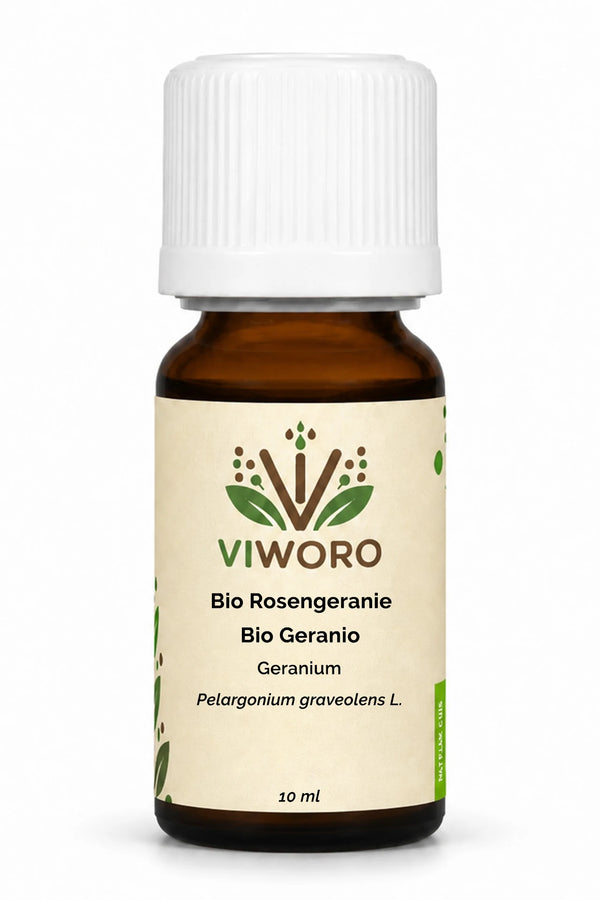
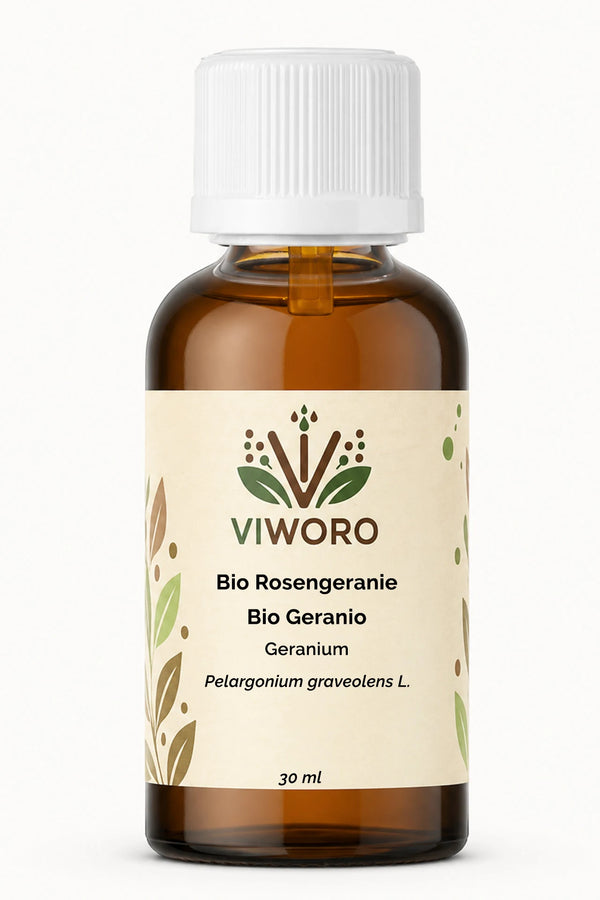
- Packaging: Amber glass bottle with dropper – airtight and light-protected
The Scent Profile
- Main aroma: Floral, rosy and slightly sweet – a warm, elegant bouquet that recalls fresh rose petals.
- Secondary note: Green-herbal and minty, with a fresh crispness that gives the floral warmth structure.
- Nuance: A subtle, fruity undertone (from citronellyl formate) that adds brightness and complexity.
Intensity: Medium – floral, warm and beautifully balanced. Geranium is present without being overwhelming – elegant rather than loud.
The Professor's Knowledge: The Scent Note
Geranium oil owes its rose-like character to two key molecules: Citronellol (25-35%) and Geraniol (15-25%). These are the same monoterpene alcohols found in true rose oil (Rosa damascena) – which is why geranium is sometimes called "the poor man's rose." But geranium is far more than a rose substitute. Isomenthone adds a fresh, minty-green facet that rose lacks entirely. Citronellyl formate introduces a fruity-fresh ester note. And Linalool brings floral sweetness. The result is an oil that bridges the floral and herbal worlds: rosy enough to feel luxurious, green enough to feel grounding. In perfumery, geranium is considered a "bridge note" – it harmonises disparate elements and creates coherence. Egyptian geranium is particularly prized for its full, sweet-rosy profile.
The Plant
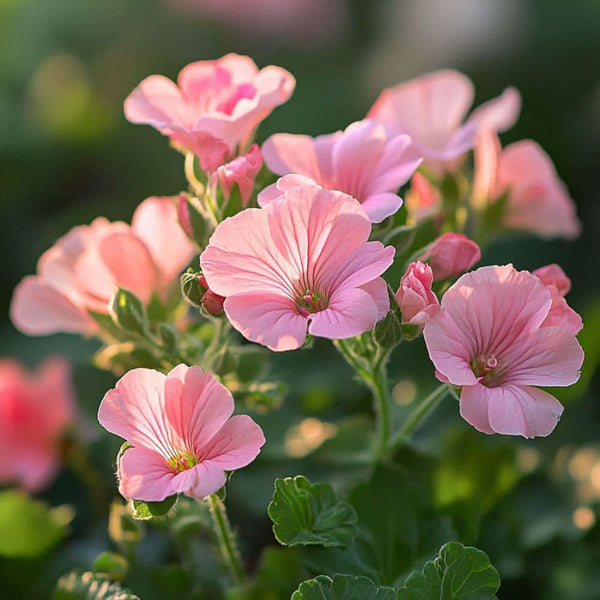
Pelargonium graveolens (Rose Geranium) is a perennial shrub from the Geraniaceae family. Despite its common name, it is not a true geranium (Geranium) but belongs to the Pelargonium genus – native to South Africa but now cultivated worldwide. Egypt is one of the premier growing regions, where the hot, dry climate concentrates the aromatic oils in the leaves. The plant grows to about 1 metre with deeply lobed, fragrant leaves and small pink-purple flowers. Interestingly, the essential oil comes from the leaves, not the flowers. The "graveolens" in its name means "strongly scented" – apt for a plant whose leaves release their beautiful fragrance at the slightest touch.
Frequently Asked Questions (FAQ)
Is geranium oil similar to rose oil?
Yes, they share key molecules (citronellol, geraniol), which is why geranium has distinct rose notes. However, geranium adds fresh-green and minty facets that rose lacks. It is more complex and less purely floral. In perfumery, it is often used alongside or instead of rose oil for its beautiful, accessible elegance.
Can I use geranium oil for skincare?
Geranium is one of the best-regarded oils for skincare. It is traditionally used for all skin types – balancing oily skin, nourishing dry skin and gently toning mature skin. Always dilute (2-3 drops in 10 ml carrier oil) before applying to the face.
Is it good for stress and anxiety?
Geranium is known as the "oil of balance." In aromatherapy, it is valued for its harmonising effect on emotions – calming when stressed, uplifting when feeling low. A few drops in the diffuser can transform the atmosphere of a room.
Why is Egyptian geranium considered the best?
Egypt's hot, dry climate produces geranium with a particularly sweet, full-bodied rosy profile. The conditions concentrate the aromatic molecules, resulting in an oil with exceptional richness and depth. Réunion (Bourbon) geranium is also prized but has a slightly different character.
Is geranium oil safe for sensitive skin?
Geranium is generally well tolerated, but as with all essential oils, perform a patch test first. Dilute in carrier oil before skin application. The high citronellol content can occasionally cause sensitisation in very sensitive individuals.
How should I store the oil?
Keep away from direct light and heat sources. The amber glass bottle protects the oil from UV radiation. Close tightly after use. Geranium oil retains its quality for several years when stored correctly.
Choose Your Size
Organic Geranium Essential Oil
10 ml Bottle
14,00 €
Perfect for trying it out or as a gift idea.
Recommended
30 ml Bottle
31,54 €
The best choice for regular use. You save!
Important Safety Information
- Use only diluted. Avoid contact with eyes and mucous membranes.
- Keep out of reach of children.
- During pregnancy, consult your doctor before use.
- May cause skin sensitisation – always perform a patch test.
- For aromatic and external use only.